
Today, the U.S. Supreme Court held that President Trump’s Executive Order No. 14160 limiting birthright citizenship violates the Citizenship Clause of the Fourteenth Amendment to the U.S. Constitution. That clause reads:
“All persons born or naturalized in the United States, and subject to the jurisdiction thereof, are citizens of the United States….”
The Executive Order would have withheld citizenship from children if at the time of their birth their mother was unlawfully present or temporary in the United States and the father was not a U.S. citizen or lawful permanent resident.
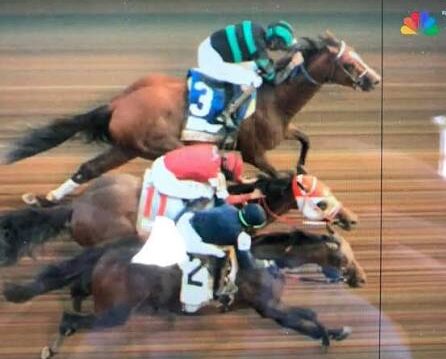
Birthright citizenship has survived, but just by a nose. It was essentially a 5-4 vote on the constitutional issue. Let’s break it down:
Chief Justice Roberts, writing for the majority, was joined by Barrett and the three liberal justices (Sotomayor, Kagan, and Jackson). His main point was that the Fourteenth Amendment’s phrase “subject to the jurisdiction” of the United States, refers to the power of the United States to govern those within its territory. It does not extend to foreign diplomats and their families with diplomatic immunity or Indians who live under the rule of quasi-sovereign Indian tribes. (Today, such citizens have been granted citizenship by statute.) But the power of the United States to govern those within its territory does extend to children of foreigners living in the U.S. illegally or temporarily.
Thomas’ dissent, joined by Gorsuch, reads the Fourteenth Amendment to reach only those who are “domiciled” in the United States. He argues that the Amendment was written specifically for Blacks. He reads the phrase “subject to the jurisdiction thereof” to apply to Blacks because they were “domiciled” in the United States, and “[t]hey had no other homeland.” But there is little or no support for that interpretation in the language of the Fourteenth Amendment or in the discussions around the time it was ratified.
Jackson wrote a concurring opinion as a retort to Thomas. She explained that in the years leading up to the 1868 ratification of the Fourteenth Amendment, Black Americans organized hundreds of local and national conventions to discuss what it meant to be a citizen in the wake of the Civil War. Freed Blacks did not advocate for a Fourteenth Amendment catering only to their situation. They pushed for an interpretation that would grant birthright citizenship not just to certain castes but to all people regardless of race of descent.
Alito’s dissent would read “subject to the jurisdiction” of the United States as subject to the jurisdiction of the United States alone and not “subject to any foreign power.” If birthright citizenship were to require the child to “not be subject to any foreign power,” as Alito suggests, millions of dual nationals would also lose constitutional birthright citizenship. And that view would make U.S. law subservient to all foreign laws: any country could narrow the scope of who is a U.S. citizen by broadening the scope of their citizenship laws.
What is striking about Thomas’ and Alito’s dissents is that they don’t mention those justices’ usual method of interpretation, originalism, which gives controlling weight to the Constitution’s original public meaning at the time its text was adopted.
Kavanaugh dissent says that the Executive Order does not violate the Fourteenth Amendment. Illegal immigration is a new problem unknown in 1868, he says, and so requires reinterpretation of the phrase “subject to the jurisdiction” of the United States. But he does not explain how illegal immigrants, much less their children (or the children of temporary visitors), are not “subject to the jurisdiction of” the United States.
So, birthright citizenship survives for now.
Leave a Reply